
Designing Through the Senses: Touch.

Guests participate in a guided tasting, handling vessels, pouring, and comparing flavors together at the table. These tactile moments invite focus, curiosity, and shared attention, turning the act of tasting into an experience shaped by touch as much as by flavor.
How tactile moments strengthen memory in intimate events.
Most event strategy focuses on what guests will see and hear. Some teams plan for taste.
Touch is often the missing layer, and in intimate experiential marketing, that matters.
Touch is the sense that activates the others. It’s what turns an event from something people observe into something they take part in.
And active participation creates stronger recall than passive exposure.
Why touch changes what people remember.
Emotion strengthens memory, but emotion alone can be fleeting.
Touch gives memory form, anchoring feeling to action, and action to recall.
When people handle materials, write by hand, or try something themselves, memory becomes more durable. It’s no longer just a feeling associated with the event, it’s an experience the body knows how to return to.
That’s why tactile moments often resurface later, unprompted.
A texture.
A weight.
A familiar motion.
The experience comes back with clarity.

Hands reaching across a shared dinner table, interacting with food and table elements during an intimate gathering.
3 ways touch shows up in intimate events
1. Workshops that belong to the brand world.
Workshops work because they give the room a shared rhythm. They lower friction, create natural conversation, and help guests settle into the experience without forced interaction.
These workshops don’t need to be a direct product demonstration; they need to feel coherent with the brand’s identity.
The activity reflects how the brand thinks, cares, or creates, not what it sells. When guests make something together, the experience becomes collective rather than performative.
2. Interactive demos that replace explanation.
In smaller formats, presentations can feel transactional. Touch shifts that dynamic.
When guests can test, compare, assemble, or explore something themselves, understanding becomes personal. Curiosity replaces persuasion. Meaning forms without pressure.
This is especially effective when the product or idea is complex, because interaction builds confidence faster than explanation.
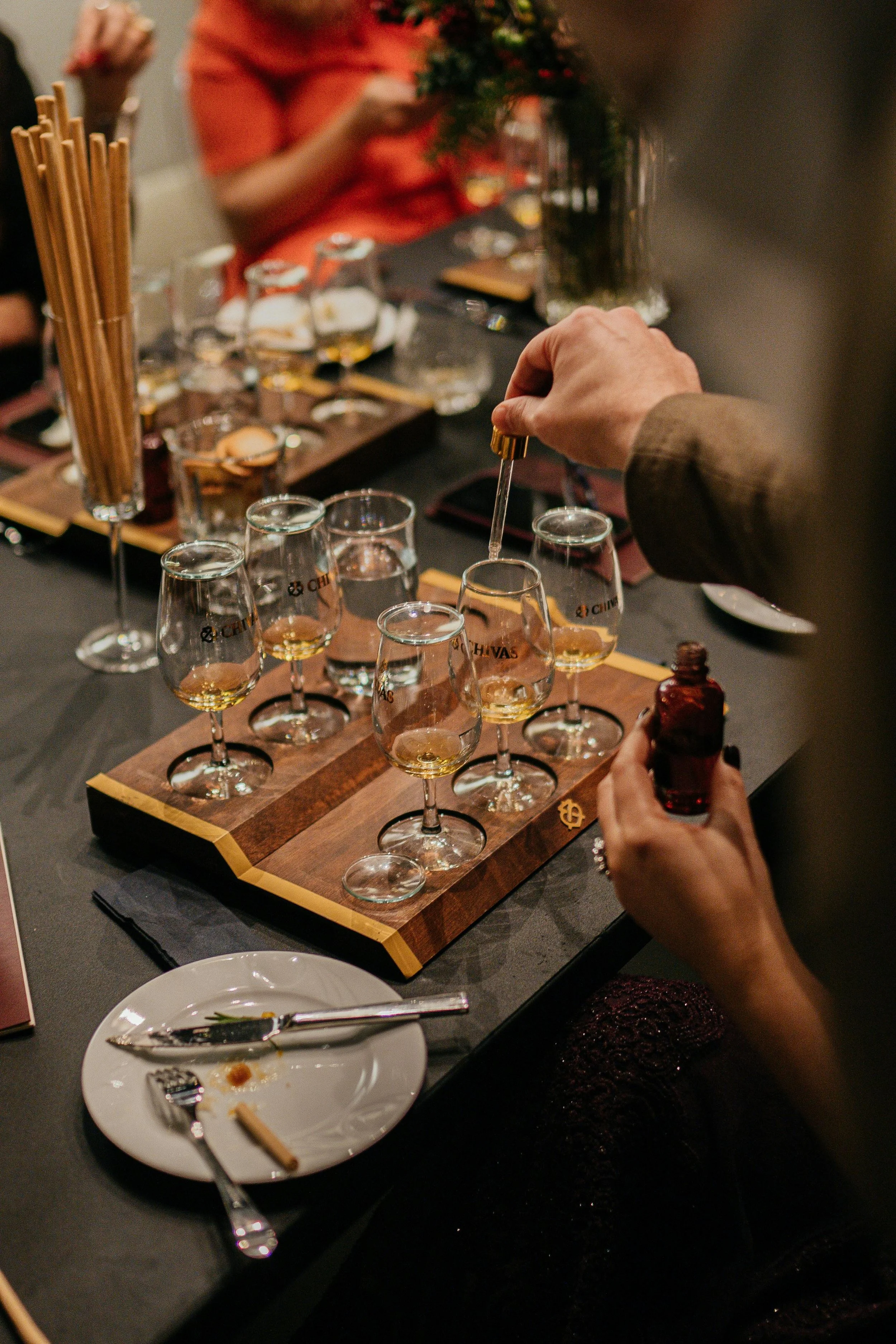
Hands participating in a guided whiskey tasting using droppers and glassware at an intimate event.
3. A handwritten moment that extends the experience.
Not all tactile moments need to be active or social. Some of the most lasting ones are quiet:
Writing a postcard or note during the event that’s mailed later on the guest’s behalf.
This slows the pace, creates reflection, and extends the experience beyond the room. When the note arrives later, the memory returns, not as a recap, but as a feeling.
A visual reflection on how touch shapes participation and memory in intimate events.
Designing with restraint.
Touch doesn’t need to appear everywhere.
One well-placed tactile moment is often enough to:
give guests a role
deepen recall
support connection
activate the other senses
In intimate events, that’s the goal, not stimulation, but participation.
Touch is often the quietest part of an event plan, yet it’s frequently what guests remember most clearly.
When people are invited to make, test, or write something themselves, the experience shifts from observation to involvement. That shift is what lingers.
If you’re planning a small-format client dinner, leadership retreat, or team gathering, this is a layer worth considering early, before the details are locked and the opportunity is missed.
For those thinking about intimate events in the coming year, this is where experience stops being decorative and starts becoming effective.
